Cash Discount vs. Dual Pricing: Which is Better for Your DMV Business?

Accepting cards is the cost of doing business. Credit and debit cards accounted for 65% of U.S. consumer payments in 2024, compared with 14% for cash, according to the Federal Reserve's 2025 Diary of Consumer Payment Choice.
But every card transaction takes a bite out of the sale. Absorbing processing fees means tighter margins. Raise prices to cover them and you risk becoming less competitive. That's an even tougher balancing act when inflation has consumers paying more for everyday necessities.
Cash discount and dual pricing programs offer another option and may be right for your business. But reducing processing costs is only part of the equation.
What happens if your customers don't like it?
A McLean, Virginia Nail Salon Had the Same Concerns
One of our nail salon clients faced exactly that concern when considering dual pricing.
The salon is in an affluent Northern Virginia community with plenty of competing salons nearby. Processing fees were cutting into the owner's profits, and dual pricing could help. But she was hesitant.
Would customers who didn't want to pay more when using a credit card simply go somewhere else? And what about her employees? Her nail technicians relied heavily on tips. If customers paid more to use a credit card, would they tip less?
Before making a decision, the owner needed to understand what her customers would see at checkout.
With a cash discount program, customers see the standard price and receive a discount when they pay cash. Visa allows merchants to offer that discount as long as it's taken from the standard price.
With dual pricing, customers see the pricing upfront. A $25 service, for example, might have a $25 cash/debit price and a $25.77 credit price. The customer chooses how to pay. Debit customers pay the cash/debit price, even when their debit card is processed without a PIN. The merchant continues to absorb the cost of debit transactions while reducing the processing costs it absorbs on credit-card sales.
For many merchants, dual pricing is easier for customers to understand and requires less explanation from employees. That's one reason most businesses we talk with today are more interested in dual pricing.
That's why we don't start with the program. We start with your business − how your customers pay, what they spend and what might make them go somewhere else.
For the McLean nail salon, that meant considering its local clientele and competition, how customers typically paid and the potential impact on employee tips.
The salon ultimately implemented dual pricing and added an ATM. Some customers began paying cash or using the ATM. Others continued using credit cards and paid the higher price.
The problems the owner feared didn't materialize. Customers continued coming, and employee tips weren't negatively affected. She was pleased enough with the results that she recommended DMV POS to friends and family who owned small businesses.
The lesson isn't that every nail salon should use dual pricing. It's that the decision shouldn't begin with “How much can I save?”
It should begin with “How will this work for my business, my customers and my employees?”
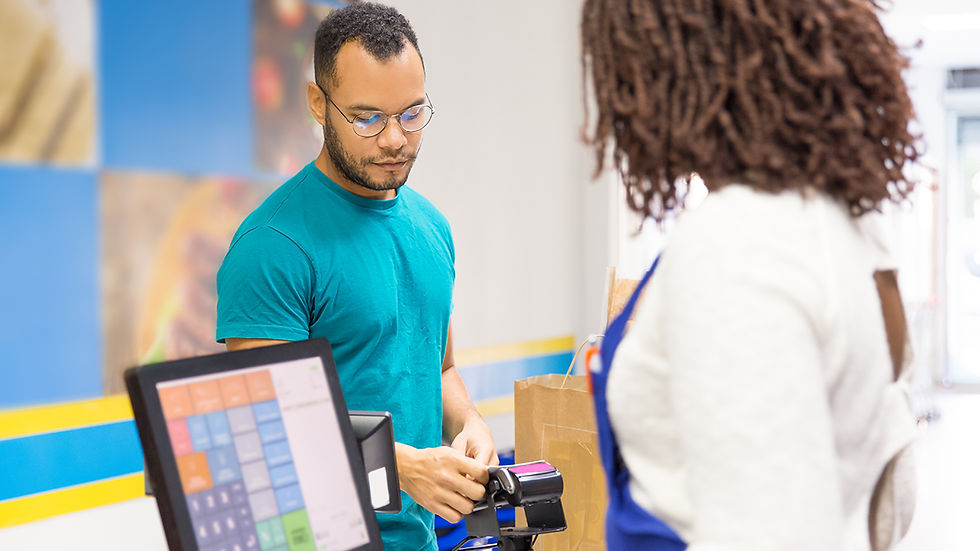
Will Your Customers Accept Dual Pricing?
For most merchants, that's the real question.
Research on credit card surcharges gives us some insight into how consumers respond when paying by credit card costs more. A PYMNTS study conducted with Payroc found that 88% of consumers who encountered a credit card surcharge ultimately paid it. But nearly half of credit card users surveyed also said they would consider switching merchants to avoid surcharges.
That's the part businesses can't afford to ignore. Saving on processing isn't much of a win if the program sends valuable customers to a competitor.
A convenience store with frequent, small-ticket purchases may have different concerns from a liquor store with a higher average ticket. A veterinarian has to consider the experience of a customer facing an unexpected bill for a sick pet.
Professional service businesses have different concerns. Clients generally don't choose an attorney or accountant the same way they choose where to buy a soda. Expertise, trust and an established relationship may matter more than price. But transaction size matters, too: 3% of a $1,500 bill is $45.
The type of business alone doesn't tell us whether dual pricing will work.
Which Payment Program Is Best for Your Business?
There isn't a one-size-fits-all answer, particularly in Washington, DC, Maryland and Northern Virginia. Customer demographics, competition and buying habits can change from one community − or even one neighborhood − to another.
That's where local knowledge comes in. Before recommending dual pricing, cash discounting or traditional processing, we look at your industry, processing costs, average ticket, competition and how your customers typically pay.
For some businesses, we may also recommend an ATM. It can give customers who want to pay cash convenient access to it while allowing everyone else to use the payment method they prefer.
Sometimes traditional processing is the better fit. That's the advantage of working with a local DMV payment provider: what works for a convenience store in Washington, DC, may not work for a salon in Arlington, Virginia, a liquor store in Silver Spring, Maryland or a professional office in Bethesda.
We don't start by selling you dual pricing or cash discounting. We start by looking at whether either one makes sense for your business.
READY TO EXPLORE WAYS TO REDUCE YOUR PROCESSING COSTS? Talk to DMV POS. We'll look at your business, your customers and how they pay to determine whether dual pricing, cash discounting or traditional processing makes the most sense.


Comments